Open-Die Forging
Form the workpiece under the press or hammer, with handling equipment that positions it for each forging operation.
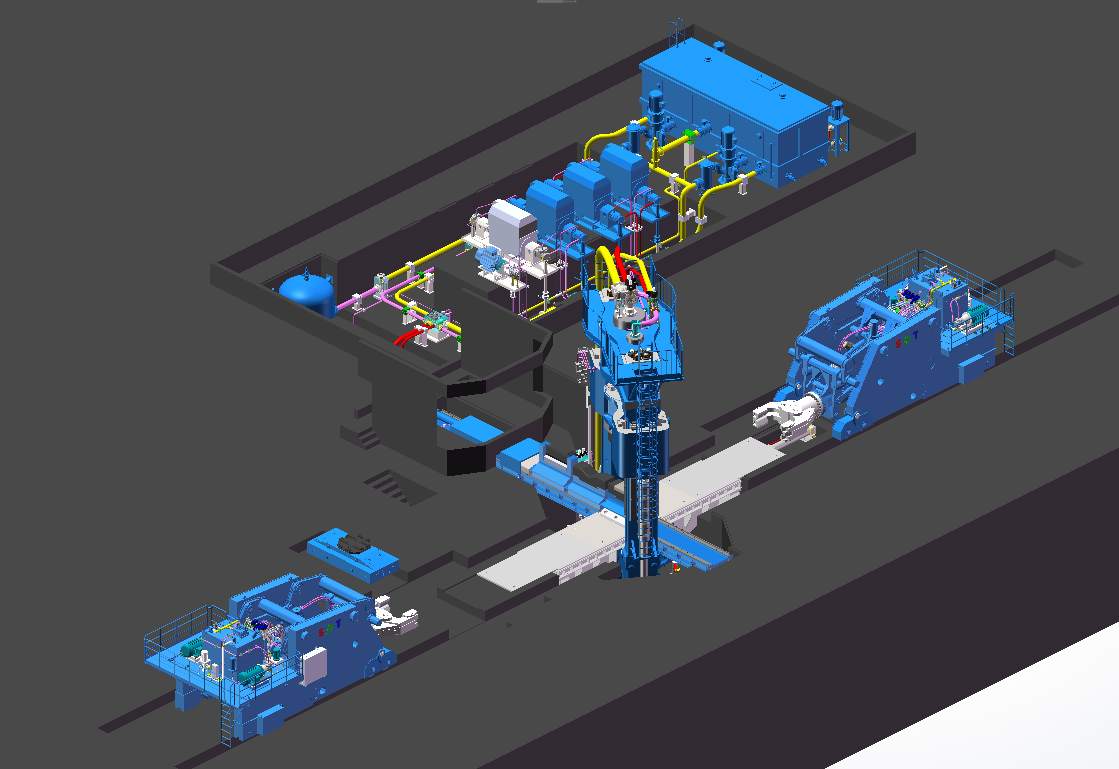 Engineering visualization
Process and equipment.
Open-die forging converts heated ingots and billets into forgings through operations such as upsetting, drawing out, punching, ring expansion and cutting. The forming equipment applies the load; the manipulator grips, supports, rotates and repositions the workpiece during the process.
SDT offers hydraulic forging presses and rail-bound or mobile forging manipulators for these complementary duties. Charging machines load and unload the heating furnace and transfer material to the forging position. Their furnace-handling role is different from the manipulator’s workpiece-control role during deformation.
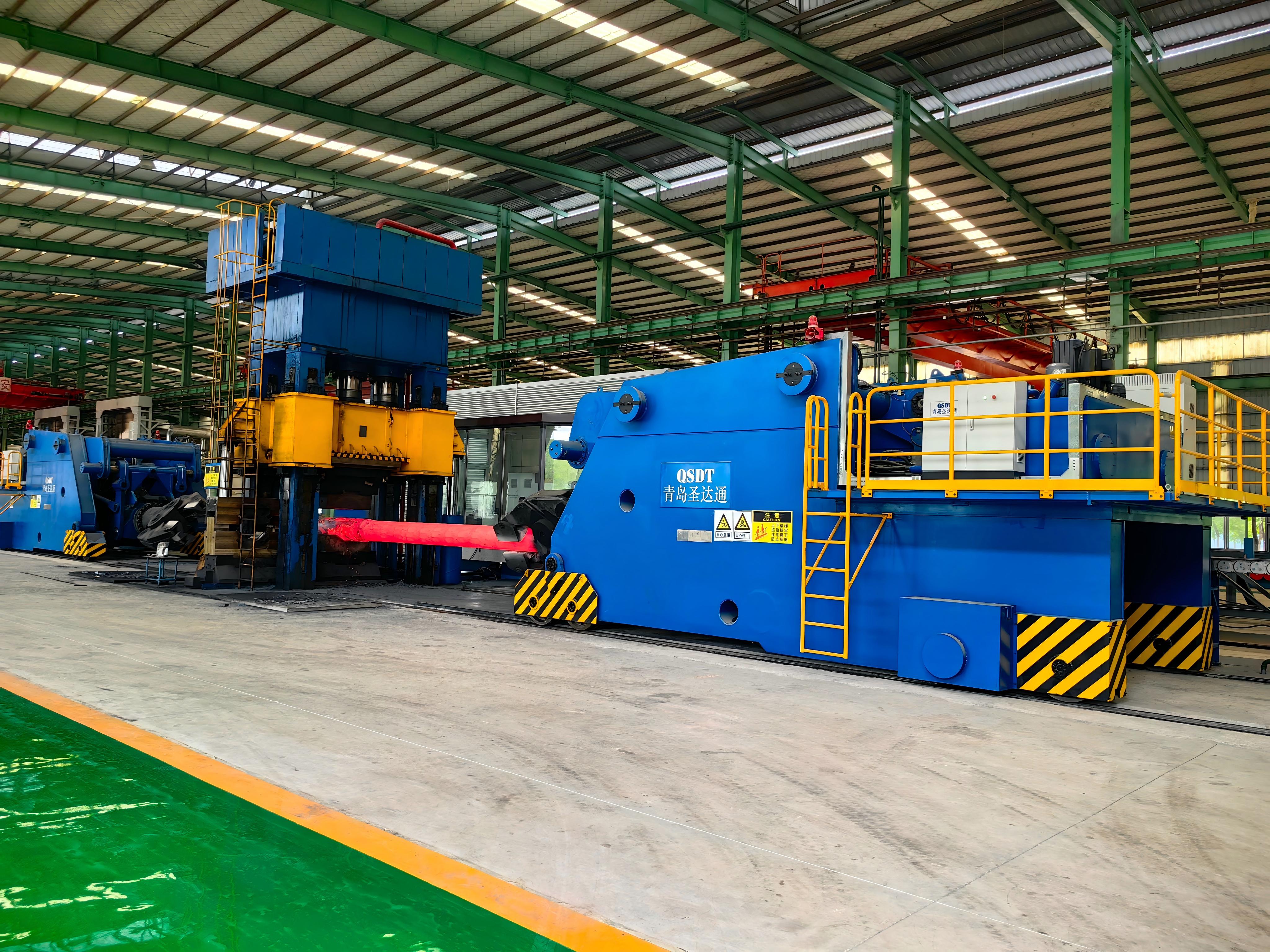
Equipment roles.
Forming
Push-down, moving-cylinder and pull-down presses are selected for the required forging duty and installation conditions.
Workpiece control
Gripping, rotation, lifting, tilting and lateral positioning are configured to present the workpiece to the tooling.
Heating and transfer
Rail-bound, wheeled and forklift-based charging machines connect the furnace with the forming area.
Equipment relationship
Press working space, tooling, manipulator reach and workpiece support are considered together.
Share the material, billet or ingot size, target forging and process route. SDT can discuss the forming and handling equipment relevant to your task.
Equipment for this application.
The key question is how the workpiece must move in relation to the press or hammer. Capacity is reviewed together with load moment, geometry, working distance and movement sequence.
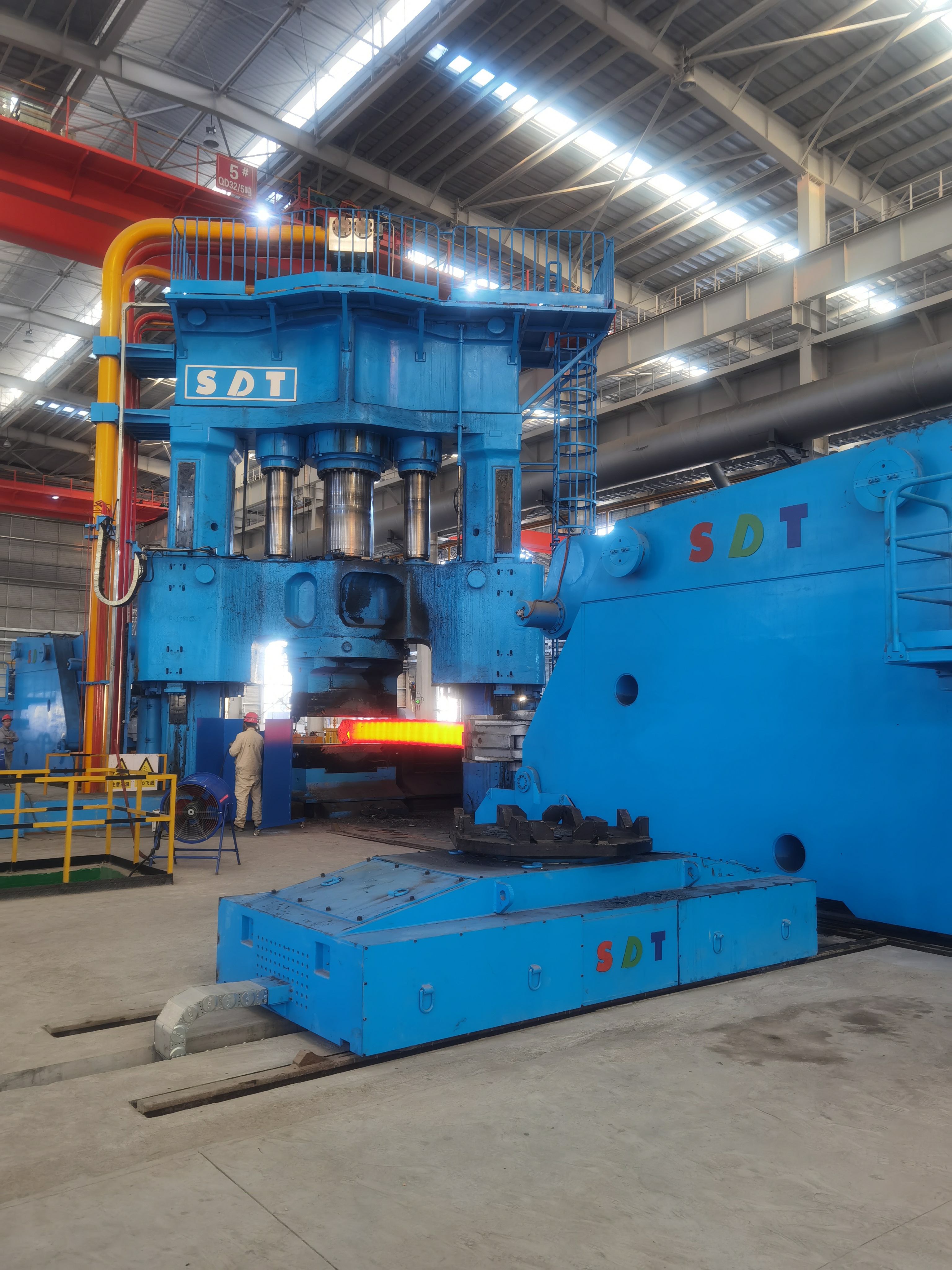 Rail-Bound Forging ManipulatorDefined working pathView Product →
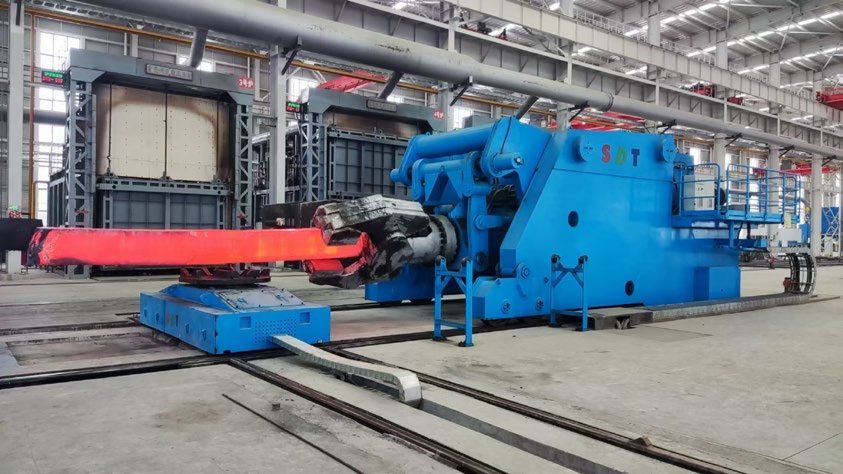 Mobile Forging ManipulatorVariable operating positionsView Product →
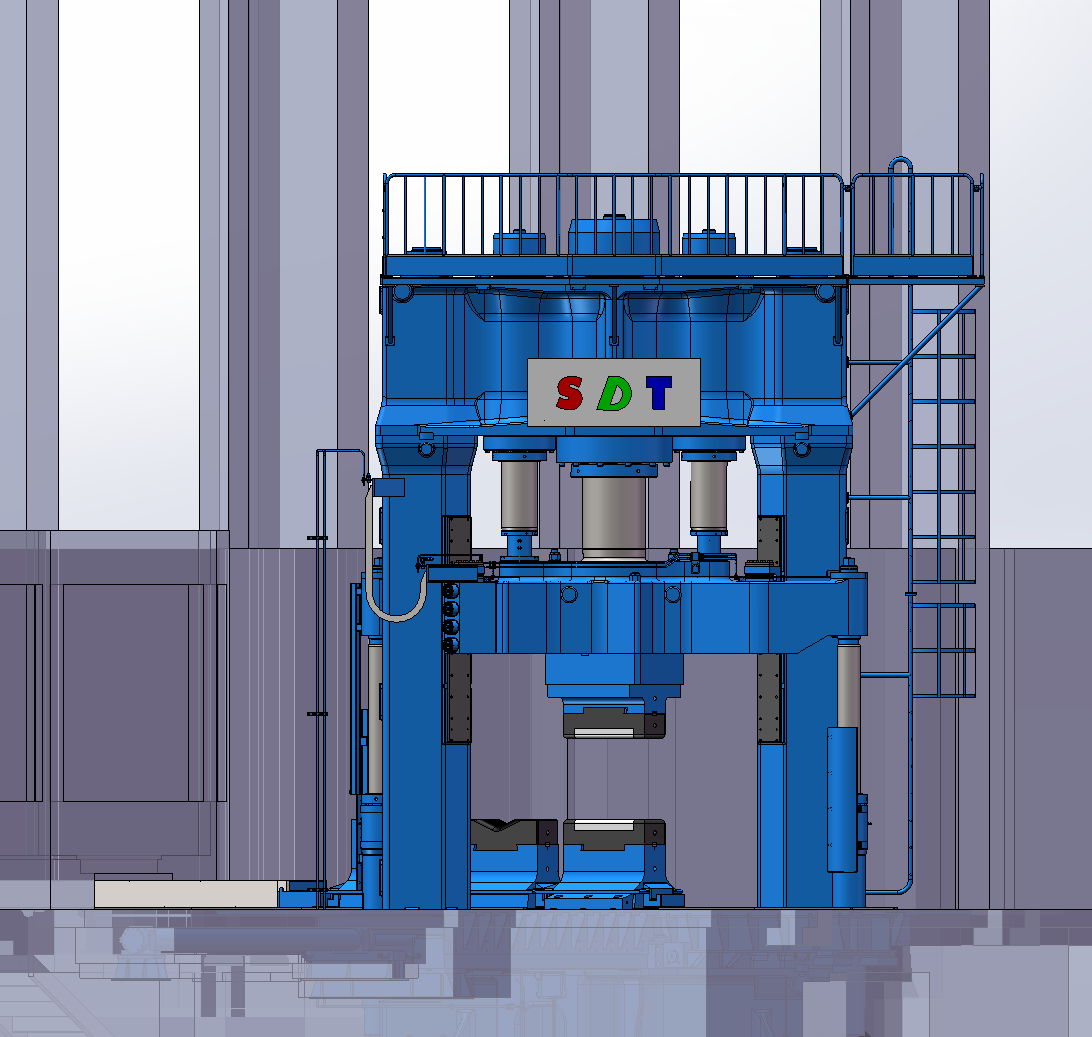 Open-Die Forging PressesForming equipmentView Product →
A forging cell in which forming force, workpiece control and auxiliary transfer have clear, coordinated responsibilities.
Explore Services →Discuss the equipment around your real production conditions.
Share an RFQ, drawing, layout or short description. SDT will coordinate the next technical discussion.
Discuss Your Project