Translating Type
Straight-line axes position the workpiece fore and aft, laterally along the travel path, and vertically through lifting and lowering. The upper platform does not slew in the horizontal plane.
 Discuss Your Project
A hydraulic manipulator that grips, rotates and positions the workpiece along a defined forging path.
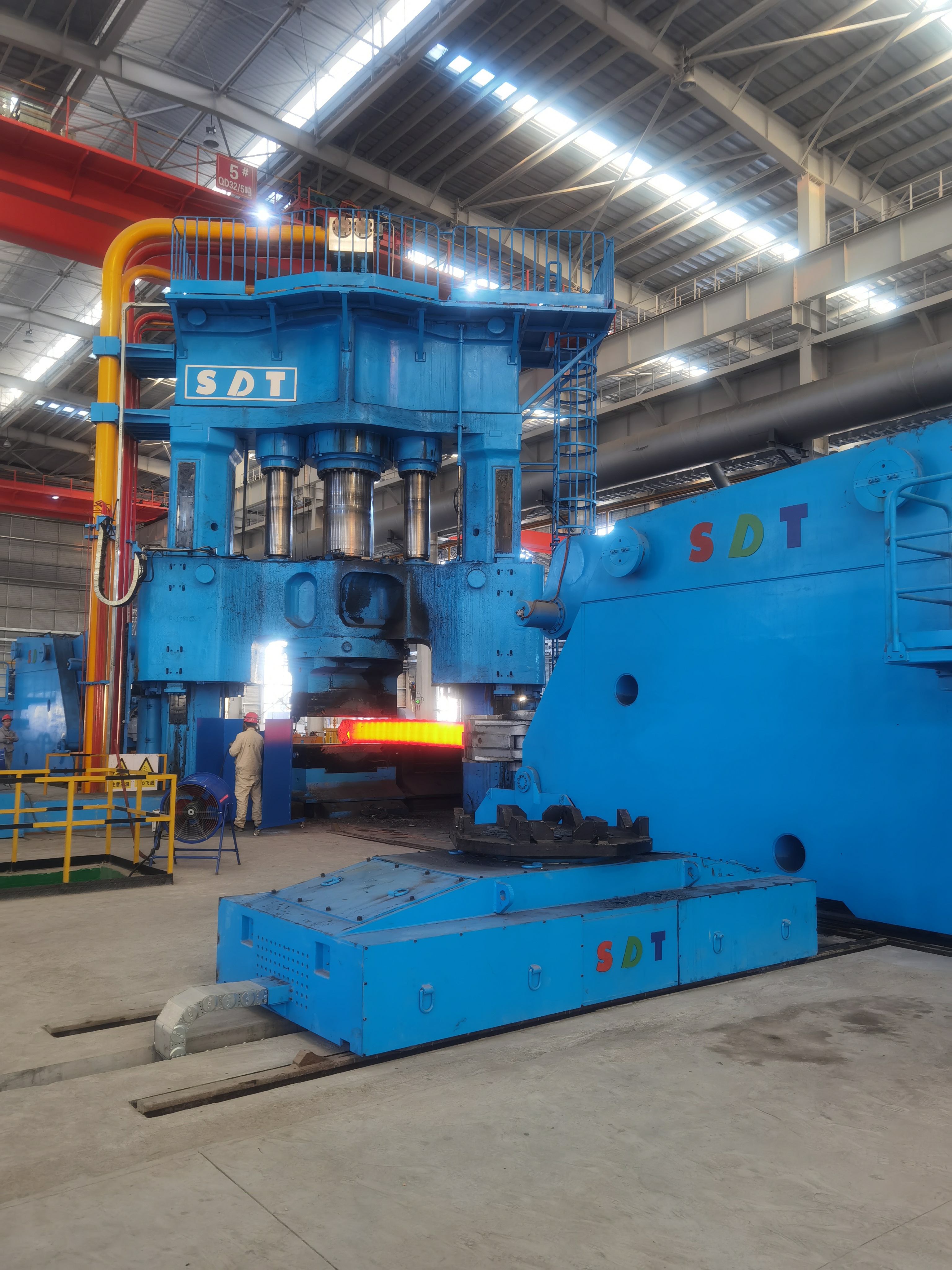
The rail-bound forging manipulator works with the press or hammer to control the workpiece during forging. Rail-guided travel moves the machine within the working zone, while the tong and peel movements position the material relative to the tooling. Its role is to handle the workpiece during the forming cycle, rather than only transport it between stations.
Functions can include tong opening and clamping, continuous tong rotation, parallel lifting and lowering, tilting, lateral peel shifting and lateral swinging. These functions are configured for the workpiece and process. The translating configuration provides fore-and-aft, lateral and vertical positioning; the slewing configuration adds horizontal rotation of the upper platform.
Rotates the gripped workpiece about its longitudinal axis; this is distinct from horizontal platform slewing.
Lifting, lowering, shifting and tilting bring the workpiece into the required forming position.
Provides a defined movement path relative to the forming equipment.
Capacity and load moment must be considered together with the gripping position, workpiece geometry and working distance. SDT defines the selected movements and operating limits in the project specification.
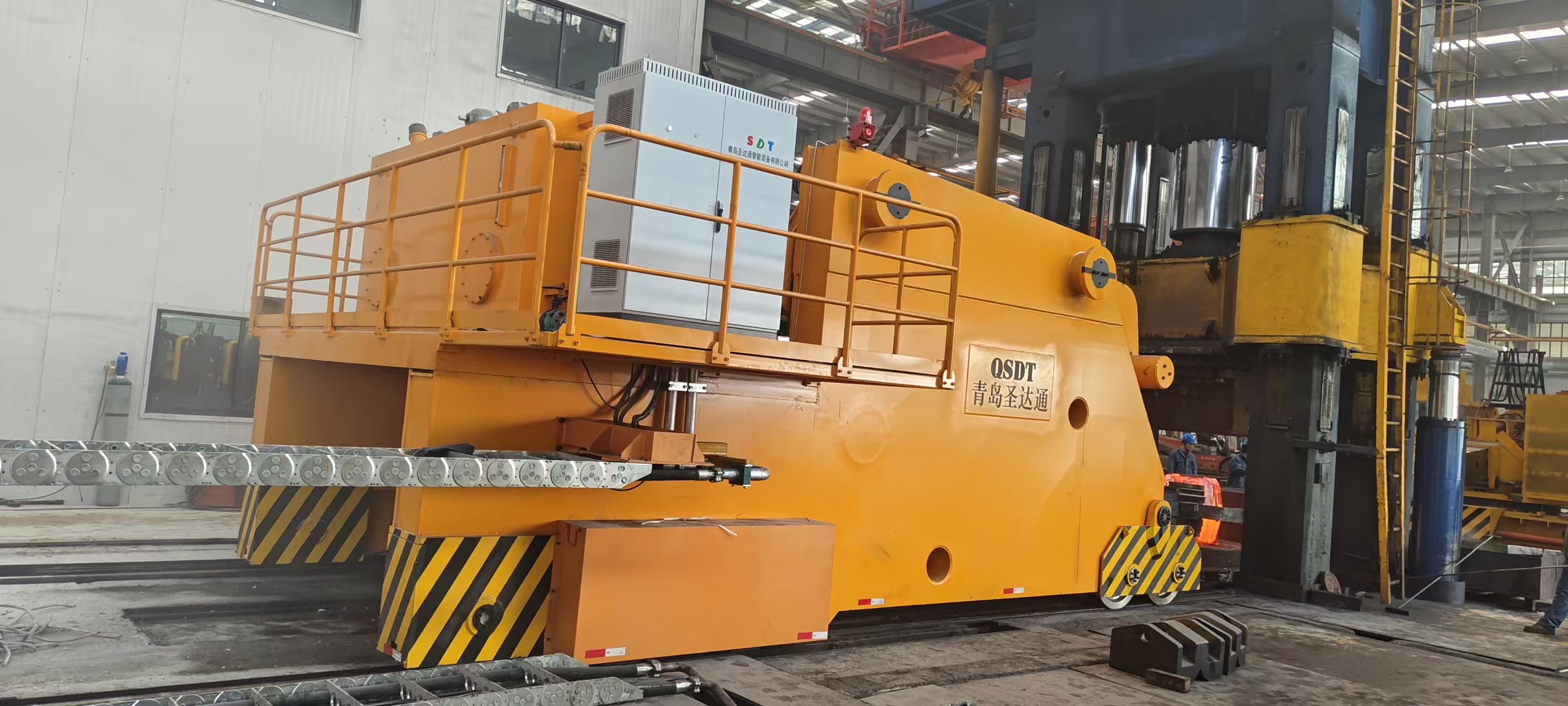
This configuration is engineered around the workpiece, load moment, forging-equipment relationship, rail path and required manipulation movements.
Movement form is confirmed separately from the rail-bound or mobile travel architecture. Platform slewing is distinct from rotating the gripped workpiece about its own axis.
Straight-line axes position the workpiece fore and aft, laterally along the travel path, and vertically through lifting and lowering. The upper platform does not slew in the horizontal plane.
Adds horizontal-plane rotation of the upper platform to fore-and-aft, lateral and vertical positioning. This changes the handling direction without relying solely on straight-line movement.
Confirm load moment, rail path and forging-equipment interface.
Share an RFQ, drawing, layout or short description. SDT will coordinate the next technical discussion.
Discuss Your Project