Translating Type
Straight-line axes position the workpiece fore and aft, laterally along the travel path, and vertically through lifting and lowering. The upper platform does not slew in the horizontal plane.
 Discuss Your Project
A purpose-built mobile machine for workpiece control during the forging process.
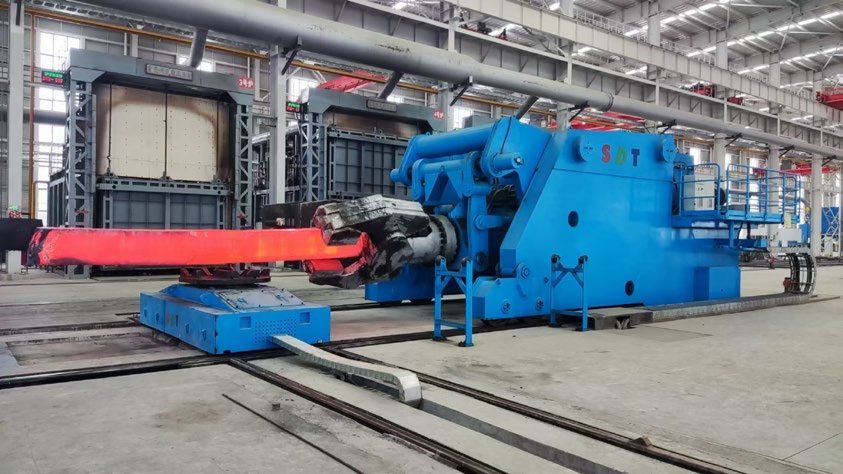
The mobile forging manipulator combines trackless vehicle movement with a forging-specific gripping and positioning mechanism. It moves between working positions without a fixed rail path, while retaining the manipulation functions needed to present the workpiece to the press or hammer.
The gripping mechanism can clamp, rotate, lift, lower and tilt the workpiece, with shifting and platform movements configured for the process. Vehicle movement determines where the machine can operate; tong and peel movements determine how the workpiece is presented to the tooling. It is a dedicated forging manipulator, not a forklift-based charging machine.
Serves changing positions within the available workshop route.
Combines load support and workpiece orientation for the forming operation.
Platform motion is specified separately from tong rotation and vehicle travel.
The selected configuration depends on workpiece geometry, load moment, floor capacity, turning space and the press or hammer working zone.
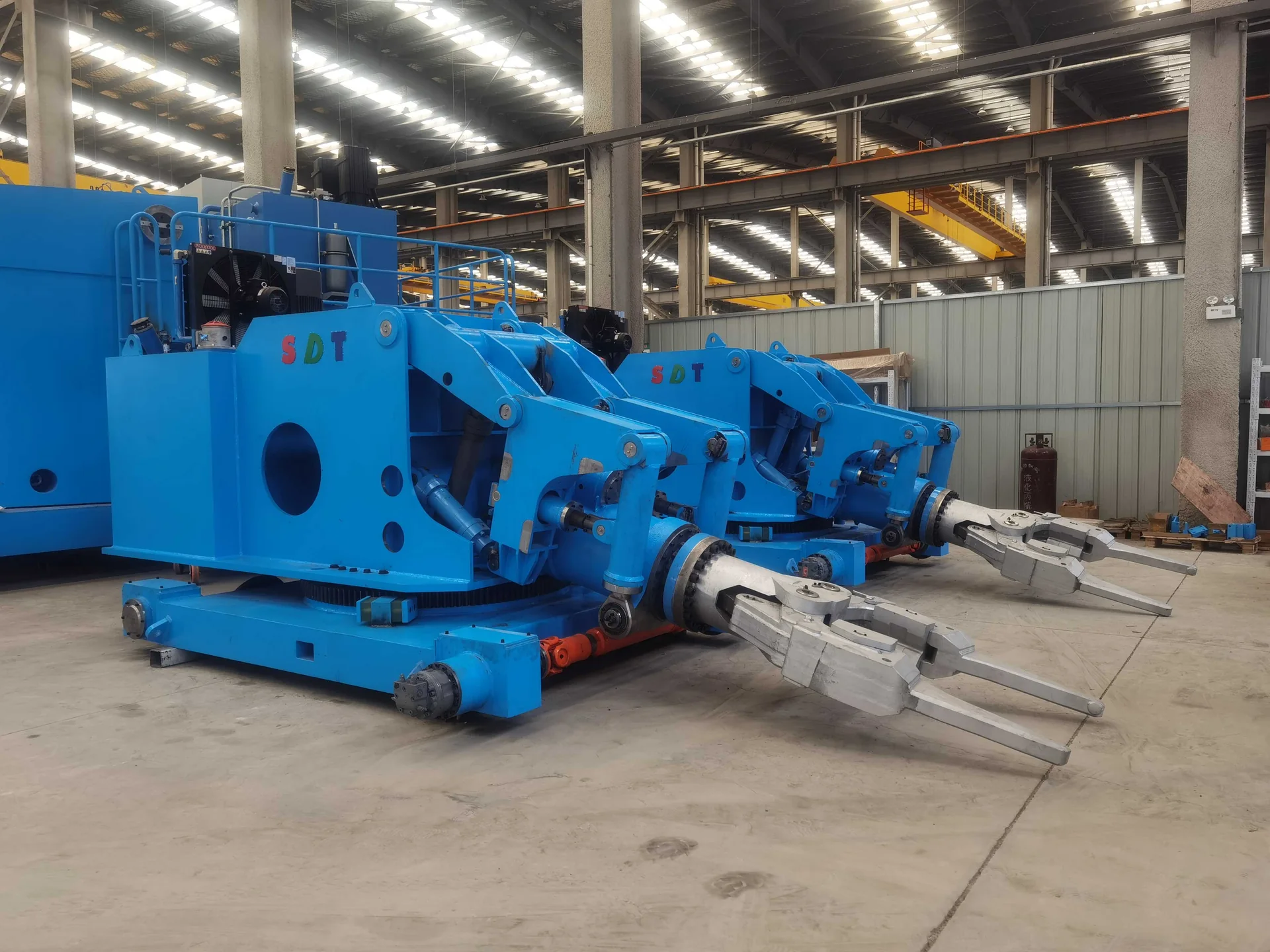
The mobile direction is selected around floor conditions, turning space, operating visibility, workpiece load moment and the relationship with forging equipment.
Movement form is confirmed separately from the rail-bound or mobile travel architecture. Platform slewing is distinct from rotating the gripped workpiece about its own axis.
Straight-line axes position the workpiece fore and aft, laterally along the travel path, and vertically through lifting and lowering. The upper platform does not slew in the horizontal plane.
Adds horizontal-plane rotation of the upper platform to fore-and-aft, lateral and vertical positioning. This changes the handling direction without relying solely on straight-line movement.
Confirm load moment, floor conditions and variable working positions.
Share an RFQ, drawing, layout or short description. SDT will coordinate the next technical discussion.
Discuss Your Project