Horizontal Type
The fork, tray or gripping tool remains substantially horizontal during furnace charging, extraction and transfer.
 Discuss Your Project
Load, extract and transfer workpieces between the heating furnace and the next process position.
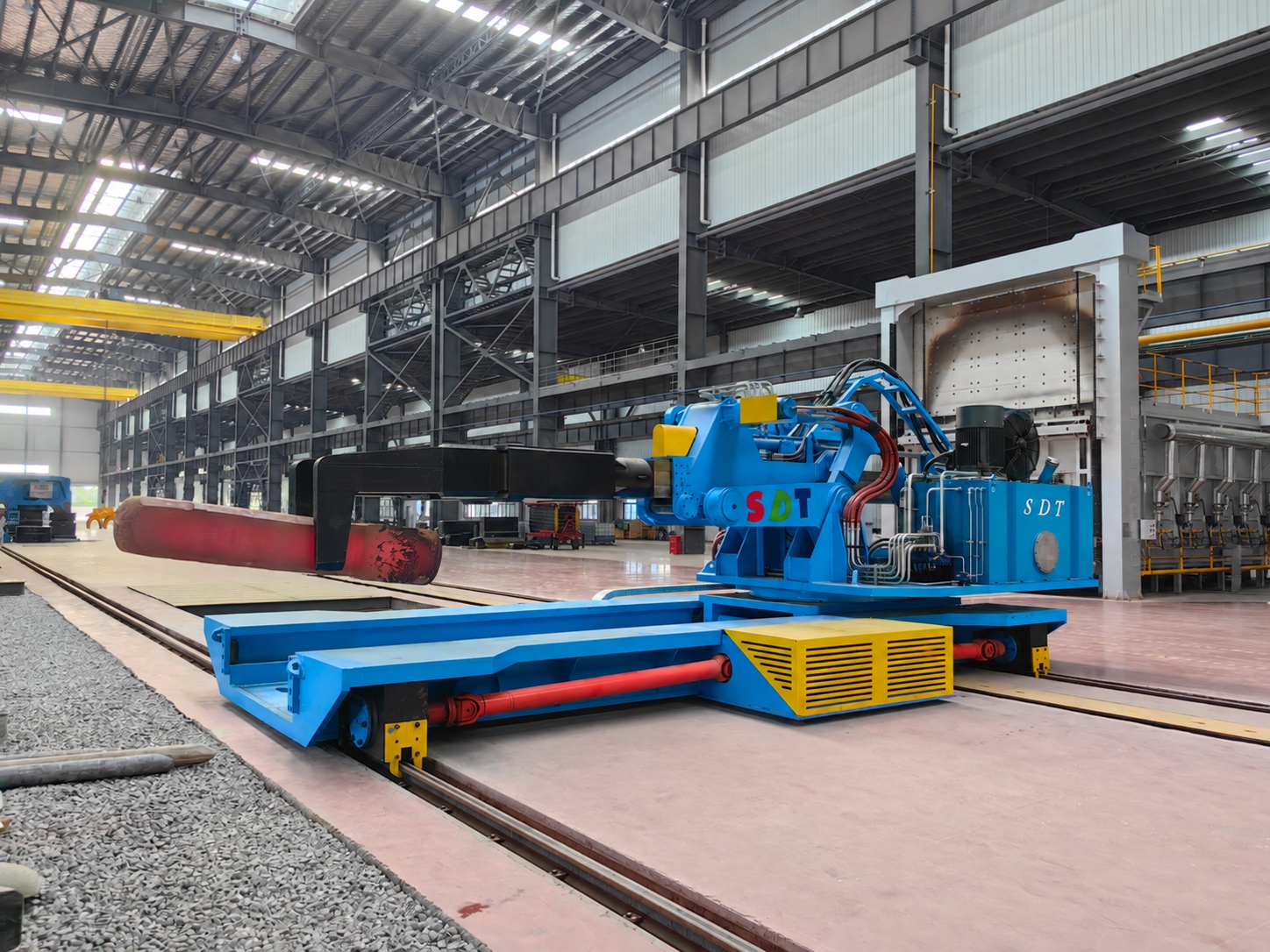
The rail-bound charging machine picks up a workpiece from the ground or loading area, places it in the heating furnace and extracts it after heating. It then transfers the workpiece to the press, hammer or another handling position. A rail path establishes the relationship between the machine, furnace and transfer points.
The charging mechanism can combine trolley travel, platform slewing, peel extension, parallel lifting, tilting, tong rotation and gripping. Horizontal and tilting forms describe the attitude of the handling tool: tilting adds upward and downward pitching to match the approach angle. The required functions are selected for the furnace geometry and workpiece.
Reach and tool attitude position the workpiece through the furnace opening.
Gripping, extension and travel support placing and withdrawing the workpiece.
Connects the furnace with the next production position without taking over the manipulator’s forging-cycle role.
Furnace opening, hearth height, charging depth and gripping geometry determine the practical arrangement. Final reach and handling capacity are specified for the project.
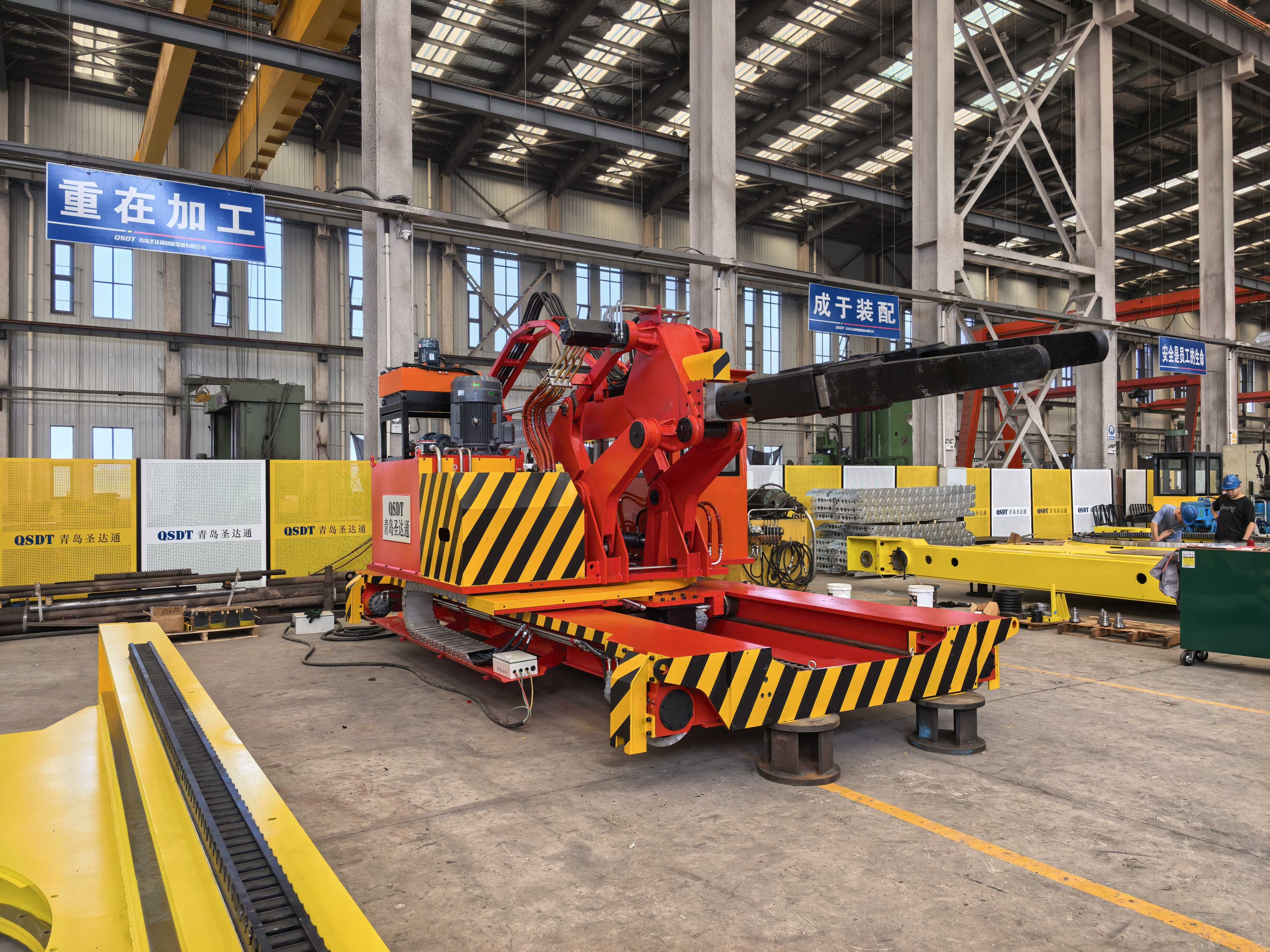
The machine is engineered around the furnace opening, reach, rail/foundation arrangement, workpiece support and required charging movements.
Tool attitude is selected independently from the rail-bound, purpose-built mobile or forklift-based platform. Tilting changes the tool angle; it is not horizontal platform slewing.
The fork, tray or gripping tool remains substantially horizontal during furnace charging, extraction and transfer.
The gripping or support tool pitches upward and downward about a horizontal pivot, allowing its approach angle to match the furnace opening and workpiece position.
Confirm furnace reach, alignment and the rail arrangement.
Share an RFQ, drawing, layout or short description. SDT will coordinate the next technical discussion.
Discuss Your Project