Horizontal Type
The fork, tray or gripping tool remains substantially horizontal during furnace charging, extraction and transfer.
 Discuss Your Project
A dedicated wheeled charging machine for furnace handling along variable workshop routes.
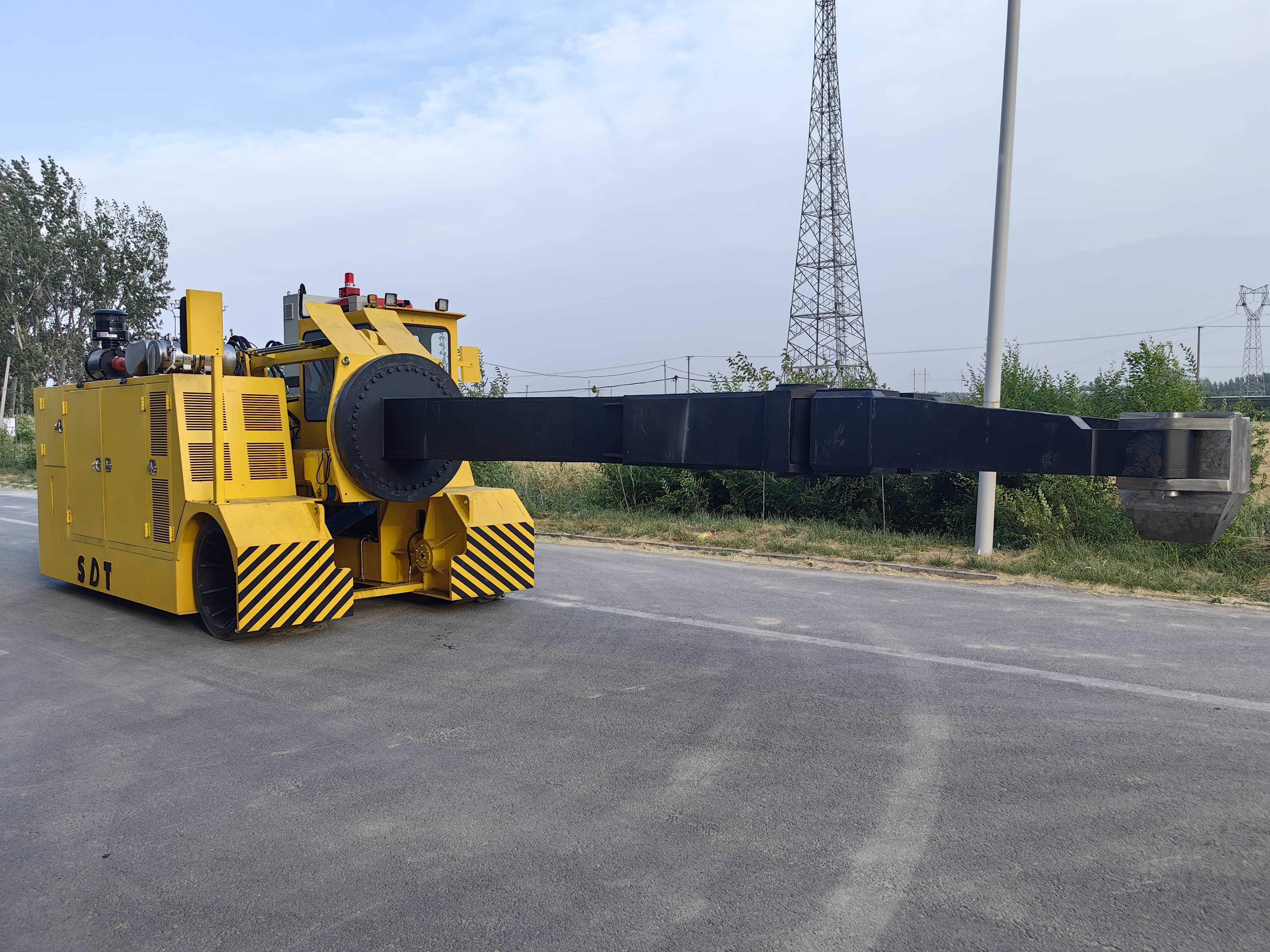
This machine combines a purpose-built wheeled vehicle with a charging and gripping mechanism. It loads and unloads heating furnaces and transfers hot workpieces to presses, hammers, ring rolling equipment or other agreed positions. The vehicle does not depend on a fixed rail route.
The dedicated vehicle configuration is separate from the forklift-based product. Workpiece support, approach reach and required tool movements are matched to the furnace and handling task. Workshop floor conditions, turning space and access directions determine how the mobile machine can move between positions.
A purpose-built mobile platform rather than a converted general-purpose forklift.
Grips and positions the workpiece at the furnace interface.
Moves between working positions where a fixed rail route is unsuitable.
The vehicle and charging mechanism are specified together. Usable capacity depends on the load center, working reach and the agreed operating positions.
Tool attitude is selected independently from the rail-bound, purpose-built mobile or forklift-based platform. Tilting changes the tool angle; it is not horizontal platform slewing.
The fork, tray or gripping tool remains substantially horizontal during furnace charging, extraction and transfer.
The gripping or support tool pitches upward and downward about a horizontal pivot, allowing its approach angle to match the furnace opening and workpiece position.
Confirm route variability, turning space and furnace approach.
Share an RFQ, drawing, layout or short description. SDT will coordinate the next technical discussion.
Discuss Your Project