Translating Type
Rail travel, fork or tray extension and vertical lifting provide lateral, fore-and-aft and up-and-down positioning without horizontal platform rotation.
 Discuss Your Project
Fork-supported handling between loading, heating, quenching, tempering, cooling and unloading positions.
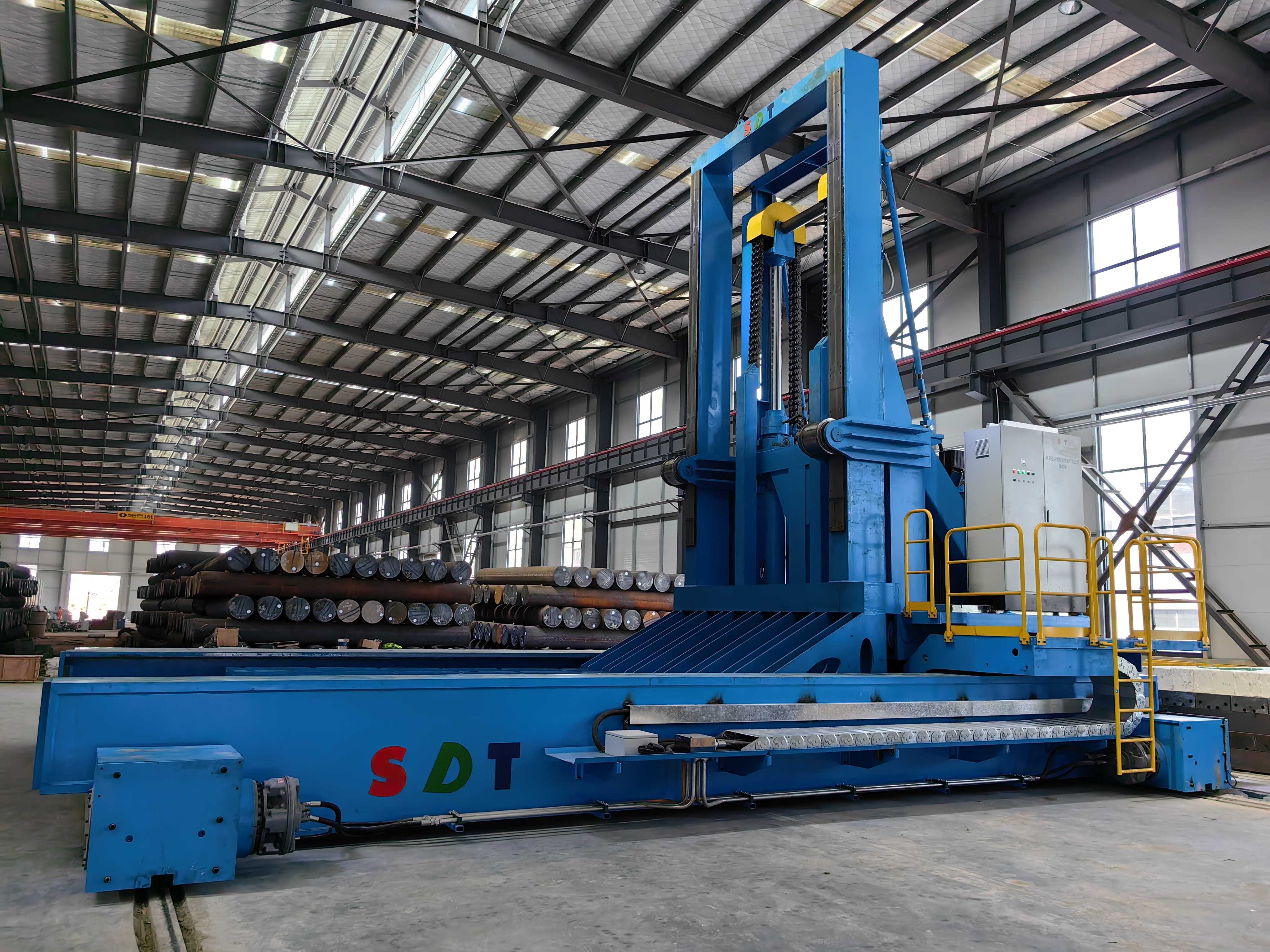
The heat-treatment charging machine takes the workpiece from its support or loading rack, positions it at the furnace and transfers it to the next treatment location. Fork support is matched to the workpiece so that the required loading, extraction and transfer operations can be carried out along the treatment route.
The translating arrangement combines rail travel, fore-and-aft fork movement and vertical lifting. A slewing arrangement adds horizontal rotation of the platform, enabling the machine to approach furnace or treatment positions on either side of the track. Platform slewing is different from tilting a gripping tool.
Supports the component at the agreed contact points during furnace loading and extraction.
Rail travel, fork extension/retraction and lifting/lowering provide lateral, fore-and-aft and vertical movement.
Changes the horizontal approach direction where the treatment layout requires it.
Manual/debug, semi-automatic and automatic/program modes are described in the SDT product range.
The fork arrangement, lift, travel and slewing requirements are defined by the workpiece support, furnace opening, quench interface and treatment positions.
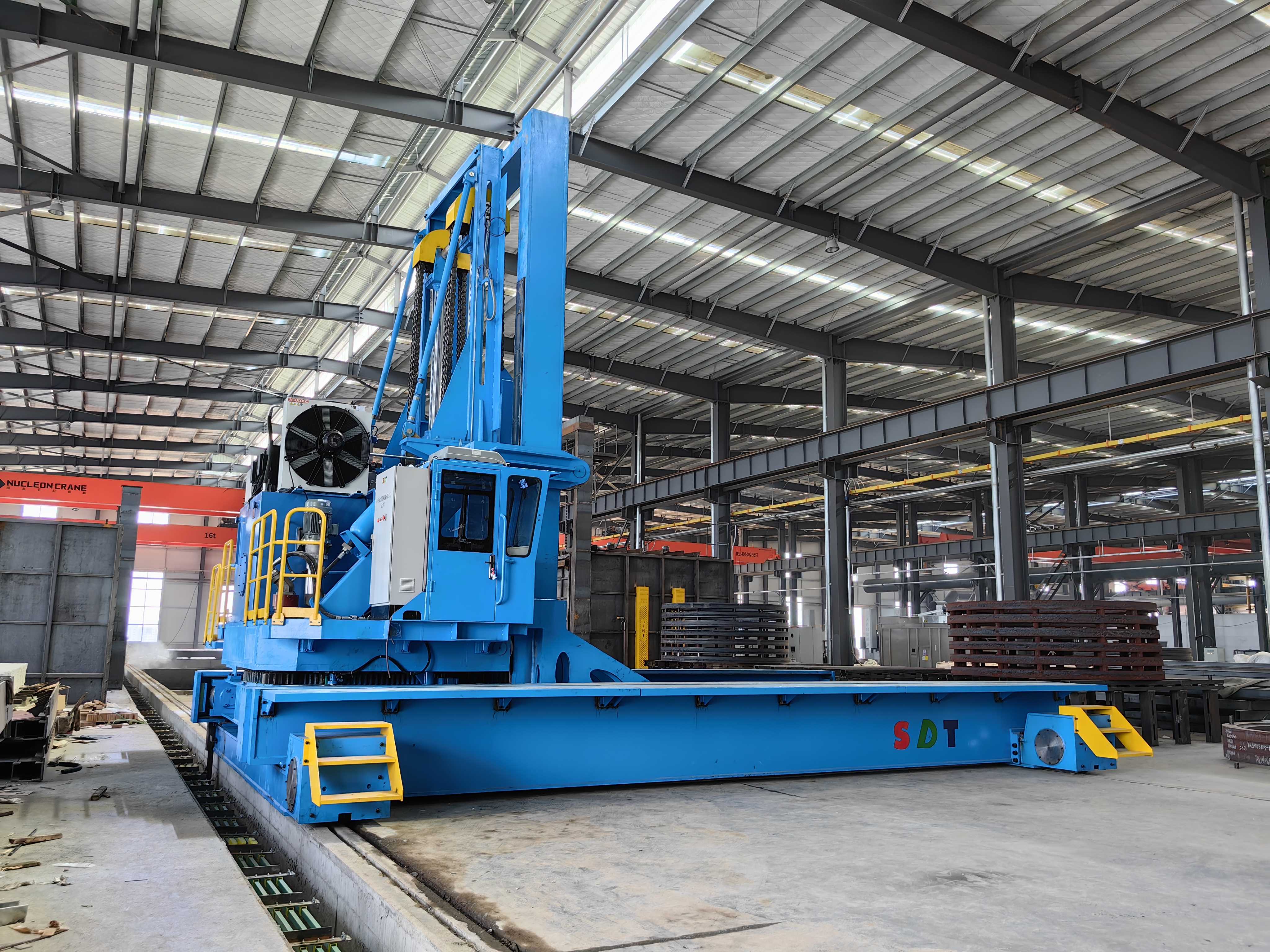
The machine loads, moves and unloads workpieces between treatment positions. Travel, lifting and platform slewing are configured around the workpiece and furnace arrangement.
The motion arrangement is selected around the furnace positions and treatment route.
Rail travel, fork or tray extension and vertical lifting provide lateral, fore-and-aft and up-and-down positioning without horizontal platform rotation.
Adds horizontal platform rotation to travel, extension and lifting, allowing the machine to serve furnaces on both sides of the track.
Define the workpiece route across the treatment positions.
Share an RFQ, drawing, layout or short description. SDT will coordinate the next technical discussion.
Discuss Your Project